

Home » Therapy Guides » Disorganized Attachment
Disorganized Attachment (Fearful-avoidant)
Understand disorganized attachment style, fearful-avoidant behaviors, complex trauma links, treatment pathways, and when to seek professional support.
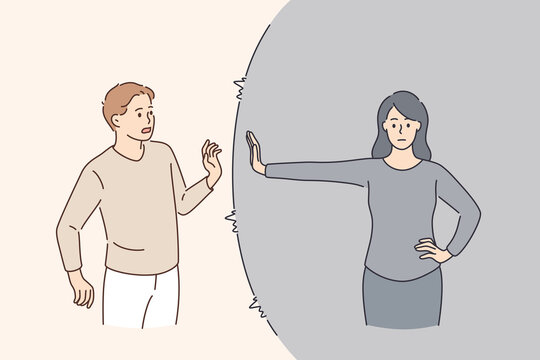
What Is Disorganized Attachment? (The Push-Pull Pattern)
Disorganized attachment style, also referred to as fearful-avoidant attachment in adults, is the fourth and most complex attachment style identified in attachment research. It is defined by a core internal conflict: a deep desire for emotional closeness paired with an equally intense fear of it. Unlike anxious attachment, which consistently seeks reassurance, or avoidant attachment, which consistently distances, people with disorganized attachment alternate unpredictably between both strategies. This is not emotional instability or indecision. It is a learned survival response shaped by early experiences where attachment itself felt unsafe.
Disorganized attachment develops from a childhood double bind in which the caregiver who was meant to provide safety was also a source of fear, threat, or emotional harm. For a child, closeness is biologically necessary for survival, but when closeness also brings pain, the nervous system faces an impossible dilemma. There is no safe strategy. As a result, the attachment system never organizes around a consistent approach to connection.
In adulthood, this unresolved conflict resurfaces in intimate relationships. A person may crave closeness, validation, and emotional intimacy, yet feel overwhelmed, panicked, or unsafe once that closeness begins to form. The fear is not imagined. It is rooted in attachment trauma and reinforced by the nervous system’s memory of danger.
In relationships, this conflict often appears as a push-pull dynamic. Someone may pursue a partner intensely, open up quickly, or seek reassurance, then abruptly withdraw, shut down, or push the partner away when intimacy feels threatening. These shifts can seem confusing or contradictory from the outside, but they are not manipulative or intentional. The nervous system is activating opposing survival strategies at the same time, switching between anxious pursuit and avoidant distancing in an effort to manage fear. Fearful-avoidant or disorganized attachment is less common than anxious or avoidant styles. Research suggests that about 5–10% of adults show fearful-avoidant attachment patterns.
Although less common than anxious or avoidant attachment, disorganized attachment is the most strongly associated with mental health challenges, including anxiety, depression, post-traumatic stress, dissociation, and chronic relationship distress. The term “disorganized” reflects not a person’s character, but the reality that their attachment system is trying to resolve two irreconcilable fears at once, leading to behaviors that appear inconsistent, chaotic, or hard to predict.
How Disorganized Attachment Manifests in Adults
Disorganized attachment does not develop randomly. It forms as a rational survival response to early environments that were emotionally impossible to navigate. Understanding how this pattern originates helps reduce shame and reframes these behaviors as adaptive responses to chronic threat, not personal failure.
The core condition that creates disorganized attachment:
Disorganized attachment forms when a child’s primary caregiver, their only source of safety, is also a source of fear. The child faces an unsolvable paradox: they must stay close to survive, yet closeness itself feels dangerous.
Childhood environments that commonly produce this pattern:
This pattern often emerges in homes marked by abuse, neglect, or extreme unpredictability. Examples include caregivers who alternate between warmth and cruelty, untreated mental illness or substance use, exposure to domestic violence, sexual or physical abuse, or severe emotional neglect punctuated by explosive emotional episodes.
Why a consistent attachment strategy cannot form:
Secure, anxious, and avoidant attachment styles each rely on a coherent strategy for staying safe through connection. Disorganized children cannot develop one because both pursuing closeness and pulling away increase danger, forcing the nervous system to switch rapidly between opposing survival responses.
How the nervous system learns disorganization:
In these environments, the child’s amygdala remains chronically activated around the caregiver, keeping the nervous system in a state of constant threat detection. Over time, the brain learns to activate anxious and avoidant survival strategies simultaneously, creating internal conflict rather than a stable pattern.
The role of intergenerational trauma:
Many caregivers of disorganized children carry unresolved trauma of their own, whether from childhood adversity or major adult losses. This does not imply intent or blame, but it explains how unprocessed trauma can disrupt caregiving and unintentionally recreate attachment trauma across generations.
Connection to abuse, neglect, and complex trauma:
Research consistently finds very high rates of disorganized attachment among children exposed to severe abuse and neglect, especially childhood sexual abuse. Complex trauma attachment is strongly linked to disorganized attachment patterns because the developing nervous system never experiences sustained safety during critical bonding periods.
Key Signs and Symptoms of Disorganized Attachment
Disorganized attachment symptoms tend to feel confusing both internally and externally. Many people recognize the pattern only after noticing repeated relationship breakdowns that follow the same emotional rhythm.
The push-pull relationship pattern:
Disorganized attachment often shows up as intense early closeness followed by sudden withdrawal. Someone may share deeply, express strong feelings, and pursue connection, then abruptly pull away or push their partner out once vulnerability feels unsafe, leaving partners feeling confused, rejected, or as if they are “walking on eggshells.”
A desperate need for closeness paired with fear of it:
People with disorganized attachment crave intimacy while simultaneously feeling threatened by it. This is not indecision or mixed signals but a nervous system conflict where the need for connection and the fear of harm cannot be felt at the same time.
Emotional dysregulation and rapid mood shifts:
Emotional states can change quickly from warmth and closeness to distance, anger, or numbness. Even minor triggers may provoke intense reactions, which can feel bewildering to partners who do not see the underlying attachment fear.
Difficulty trusting others despite wanting intimacy:
There is often constant scanning for signs of rejection, betrayal, or abandonment. Neutral behaviors may be interpreted as threats because early attachment taught that trust leads to pain, creating cycles that push away safe relationships.
Inconsistent behavior and unstable boundaries:
Boundaries may swing between extremes, either oversharing too quickly or abruptly cutting people off. Others may struggle to predict reactions or understand what feels safe, because responses shift with internal emotional states.
Heightened sensitivity to perceived rejection:
Small moments of distance, criticism, or conflict can trigger intense emotional reactions. These experiences activate deep abandonment and betrayal wounds, often leading to withdrawal, hostility, or shutdown instead of repair.
Fear of both abandonment and engulfment:
Unlike anxious attachment, which primarily fears abandonment, or avoidant attachment, which fears loss of autonomy, disorganized attachment fears both. Commitment can feel suffocating, while separation feels unbearable, creating a constant internal no-win scenario.
Difficulty identifying and expressing emotions:
Many people with disorganized attachment struggle to name what they feel in the moment. Emotions may feel overwhelming, numb, or chaotic, making it hard to communicate needs clearly or understand what is happening internally.
Impulsive or self-destructive coping behaviors:
During periods of emotional overload, some turn to risky or self-destructive behaviors such as substance use, unsafe sex, self-harm, or reckless decision-making. These behaviors function as attempts to escape or regulate unbearable emotional intensity.
Chronic relationship instability:
Patterns often include intense but short-lived relationships, repeated breakups, or staying in unhealthy dynamics because being alone feels more threatening than staying. Breakups may trigger severe emotional distress and panic.
Persistent feelings of emptiness and shame:
Even when close to others, individuals may feel deeply lonely or fundamentally flawed. A sense of chronic emptiness and negative self-beliefs is common and closely tied to attachment trauma.
Dissociation and emotional numbing:
When emotional arousal becomes overwhelming, the nervous system may shut down through dissociation or numbing. This response serves as a last-resort form of protection when other coping strategies fail.
It’s important to understand that these signs are not personality flaws. They reflect a nervous system shaped by attachment trauma and organized around survival, not stability.
The Connection to Complex Trauma and PTSD
When early relationships are frightening, chaotic, or unsafe, the attachment system adapts to survive. What looks confusing in adulthood is often the nervous system doing exactly what it learned to do to stay alive.
Disorganized attachment as a trauma response:
Disorganized attachment is not a disorder or diagnosis. It is a rational response to abnormal childhood conditions where safety and danger came from the same person, forcing the nervous system to develop conflicting survival strategies.
Strong link to complex PTSD:
Disorganized attachment has one of the strongest associations with Complex PTSD, which develops after prolonged, repeated relational trauma rather than a single event. Many people with disorganized attachment meet criteria for C-PTSD, and many people with C-PTSD show fearful-avoidant attachment patterns in close relationships.
Overlapping symptoms with Complex Trauma:
Both disorganized attachment and C-PTSD involve emotional dysregulation, chronic shame, negative self-beliefs, relationship instability, hypervigilance to threat, and dissociation. Healing requires addressing both attachment trauma and post-traumatic stress, not treating them as separate problems.
How developmental trauma affects the brain:
Early relational trauma alters how the brain develops and functions, particularly increasing amygdala reactivity, disrupting self-referential processing, and reducing stress regulation capacity. These changes are adaptive responses to threat and explain why emotional regulation and trust feel so difficult, though they remain changeable with treatment.
Why standard therapy often falls short:
Approaches that focus only on thoughts and behaviors, such as cognitive behavioural therapy alone, often miss the nervous system roots of attachment trauma. People with disorganized attachment typically need trauma-informed, attachment-focused therapy that works directly with emotional regulation, safety, and relational repair.
Why this reframe matters for healing:
Understanding disorganized attachment as a trauma response rather than a personal flaw reduces shame and self-blame. When the trauma roots are recognized and treated, meaningful healing is possible, and relationships no longer have to feel like a constant emotional battlefield.
How Disorganized Attachment Shows Up in Adult Relationships
Intimate relationships can feel intense, confusing, and emotionally volatile when closeness and fear are activated at the same time. One moment, connection feels deeply desired and even necessary. The next, that same closeness can feel overwhelming, unsafe, or suffocating.
In adult relationships, this internal conflict plays out through cycles of pursuit and withdrawal that leave both partners confused and exhausted.
Early intensity and rapid emotional escalation:
At the start of a relationship, people with disorganized attachment often appear warm, attentive, and deeply engaged. They may move quickly into emotional intimacy, share personal history early, express strong feelings, and create a sense of instant closeness that feels exciting and meaningful to their partner.
The moment closeness becomes too real:
As the relationship stabilizes or deepens, something shifts. Commitment, emotional availability, or expectations of consistency can activate fear, causing the avoidant side to take over. They may suddenly become distant, critical, emotionally unavailable, or threaten to leave as a way to restore a sense of safety.
Partner confusion and the push-pull cycle:
The partner often responds to this sudden withdrawal by seeking reassurance or clarity. This pursuit activates the anxious side of the disorganized attachment pattern, leading the person to move back toward closeness, apologize, or reconnect emotionally. Relief follows briefly, until intimacy again feels overwhelming and the cycle repeats.
Automatic deactivating strategies:
When closeness triggers fear, disorganized attachment often activates distancing behaviors without conscious intent. This may include picking fights, focusing obsessively on flaws, fantasizing about alternative partners, flirting with others, overworking, or creating emotional chaos to regain distance and control.
Stonewalling and hostile withdrawal during conflict:
During disagreements, engagement can feel unsafe. Instead of working through issues, the disorganized partner may shut down, go silent, leave the situation, or respond with defensiveness or hostility. This protects them from emotional overwhelm but leaves their partner feeling dismissed and unheard.
Sabotaging healthy relationships:
Because safety contradicts early learning, healthy relationships can trigger fear rather than comfort. Right when things are going well, the disorganized attachment system may create conflict or initiate a breakup, followed by intense grief and regret that reactivates abandonment panic.
Feeling chronically misunderstood:
Disorganized individuals often feel their partner does not truly understand them, even when the partner is trying hard. Conflicting internal needs make it difficult to communicate clearly, leading to resentment, blame, and a sense that nothing ever feels quite right.
Sex and emotional intimacy conflicts:
Physical and emotional intimacy can activate vulnerability fears. Desire may be intense at times and completely shut down at others, leaving partners confused about boundaries, interest, and emotional safety.
Breakup and reconnection cycles:
Breakups often feel catastrophic and may trigger desperate attempts to reconnect, promises to change, or emotional appeals. Once closeness is restored, fear reemerges and withdrawal follows again, prolonging pain and confusion for both partners.
How to Treat and Manage Disorganized Attachment
Healing disorganized attachment is a gradual process that happens alongside professional support, not instead of it. The strategies below can help stabilize daily life, reduce emotional overwhelm, and support the deeper work happening in therapy.
Develop self-compassion and reduce self-blame:
The first step is interrupting the harsh self-criticism that often accompanies disorganized attachment. Remind yourself that your responses make sense given your history and that these patterns were learned for survival, not because something is inherently wrong with you.
Build emotional awareness through the body:
Because attachment trauma is stored somatically, body-based practices can help restore awareness and regulation. Gentle yoga, breathwork, or progressive muscle relaxation can reconnect you to sensations and emotions that were once unsafe to feel, as long as you start slowly and avoid pushing through overwhelm.
Create predictability and safety in daily life:
Consistent routines provide stability for a nervous system shaped by chaos. Regular sleep, meals, movement, and designated calming spaces help lower baseline stress, making emotional regulation more accessible.
Identify triggers and create intentional space:
As therapy helps clarify your triggers, you can plan for them instead of reacting automatically. Preparing for commitment conversations, taking breaks during conflict, or stepping away when emotions spike helps manage activation while healing, without avoiding intimacy altogether.
Practice vulnerability in small, controlled steps:
Rather than swinging between emotional shutdown and oversharing, build tolerance gradually. Share small feelings, ask for modest support, or express mild needs with safe people to expand capacity without overwhelming the nervous system.
Use journaling to process emotions:
Writing can help externalize internal chaos and make emotional patterns more visible. Journaling supports insight, regulation, and integration between therapy sessions by giving shape to feelings that may otherwise feel confusing or unmanageable.
Build a broader support network:
Relying on one person for all emotional needs increases pressure and activation. Developing friendships, community ties, or support groups creates multiple sources of connection and reduces relationship strain.
Practice patience with the healing process:
Progress is rarely linear. Setbacks, emotional regression, and difficult moments are part of trauma recovery, not signs of failure. Measuring growth over months and years rather than days helps maintain perspective and compassion.
Professional support remains essential:
While these strategies support day-to-day stability, they do not replace therapy. Healing disorganized attachment requires professional guidance to address attachment trauma, regulate the nervous system, and work through related challenges such as anxiety and depression using approaches like attachment-focused therapy and cognitive behavioral therapy.
Schedule a Free Consultation
If you’re seeing these dynamics in a relationship you care about, a professional consultation can help you understand what’s happening and how to respond in ways that support healing rather than reinforce the cycle.
Frequently Asked Questions
No, it’s not a diagnosis itself, but it’s strongly associated with complex PTSD, anxiety, depression, and dissociation. A therapist can assess whether you meet criteria for diagnosable conditions alongside attachment patterns.
Yes, absolutely. While it requires substantial therapeutic work because it’s rooted in trauma, research shows attachment styles can change. With trauma-informed therapy and time, people move toward more secure attachment and healthier relationships.
No, disorganized attachment isn’t the same as borderline personality disorder, but there’s overlap. Some people with disorganized attachment have BPD traits; not all do. Disorganized attachment is an attachment pattern; BPD is a personality disorder diagnosis. Only a qualified therapist can distinguish.
There’s no fixed timeline when it comes to healing any form of attachment pattern, but it typically takes 1-3+ years of consistent therapy. Some noticeable improvements happen within 3-6 months as nervous system regulation skills develop.
Yes, with awareness, commitment to therapy, and a patient partner. It’s more challenging than other attachment styles, but many people with disorganized attachment create secure, fulfilling relationships as they heal.
Yes, but it requires effort and often therapy (individual or couples). Without awareness, these pairs often create painful pursuer-withdrawer cycles. With commitment and professional support, they can develop healthier communication patterns and mutual understanding.
It isn’t that disorganized attachment is more treatable than other attachment patterns. All attachment styles can change with the right support. However, disorganized attachment responds especially well to trauma-informed treatment because it is rooted in unresolved attachment trauma and nervous system dysregulation.
When therapy directly addresses these trauma foundations rather than relying on standard talk therapy alone, meaningful and sustained change becomes much more achievable.